Johan Heylen versus Eddy Verloes (2026)
Discover the fascinating confrontation between two artists. Eddy Verloes and Johan Heylen explore existential isolation, absurdity, and liminal mysticism in an artistic dialogue reminiscent of Samuel Beckett.
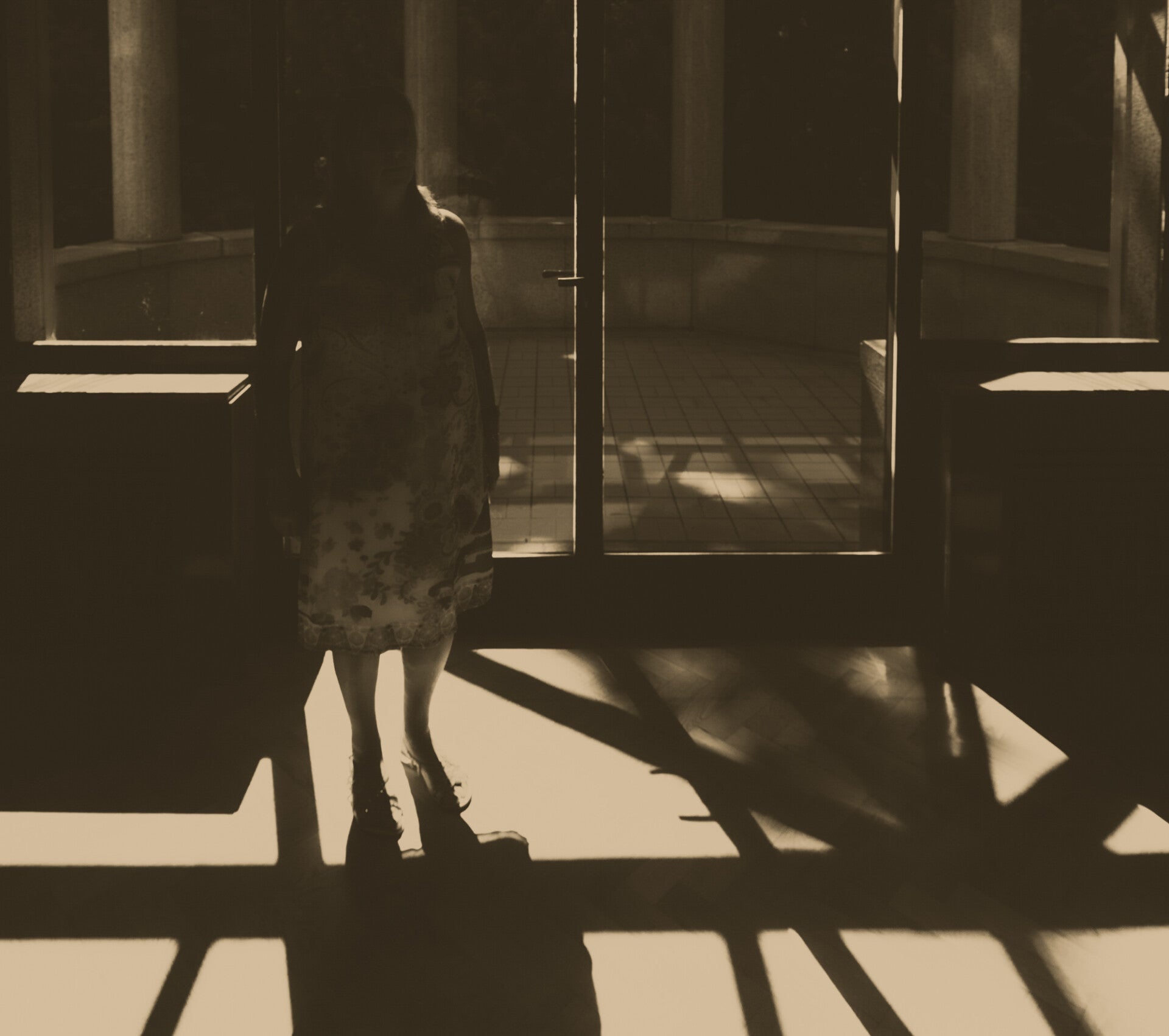
Existential isolation and the absurd
The parallels between Eddy Verloes and Johan Heylen center on existential isolation, absurdity, and liminal mysticism. Both creators use visual ambiguity to evoke the stripped-down, tragicomic, and silent human condition famously explored by Samuel Beckett.
Both artists depict solitary, wandering, or trapped individuals who appear out of place in their surroundings. The figures in Heylen’s paintings and the isolated subjects in Verloes’s photographs move through desolate spaces without clear salvation, purpose, or destination. This echoes Beckett’s plays, in which characters are stranded in an incomprehensible universe, questioning the meaning of "being.
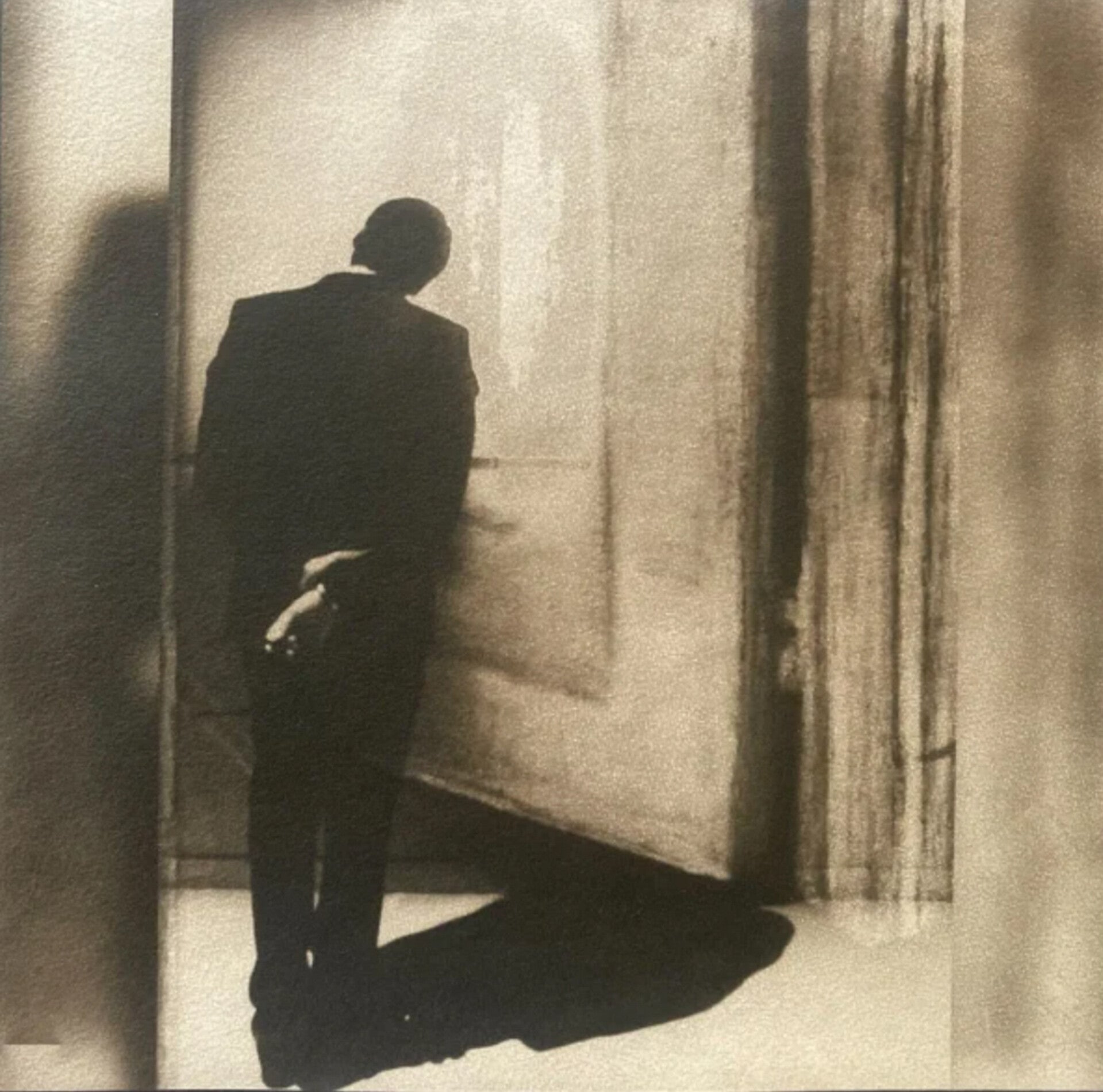
Atmosphere of mystery and silence
- Solitary figures: Both feature lonely, wandering, or trapped individuals who seem out of place in their environments.
- Aimless wandering: Characters in Heylen’s canvases and the isolated subjects in Verloes's photographs move through desolate spaces without clear salvation, purpose, or destination.
- Theatrical alienation: They echo Beckett's plays where characters are stranded in an incomprehensible universe, questioning the very meaning of "Being".
A deeper technical analysis reveals how Eddy Verloes (through photography) and Johan Heylen (through painting) transform abstract existential anxiety into tangible, minimalist images. Their shared connection to the stark, empty theater of Samuel Beckett is forged through the specific manipulation of space, light and shadow.
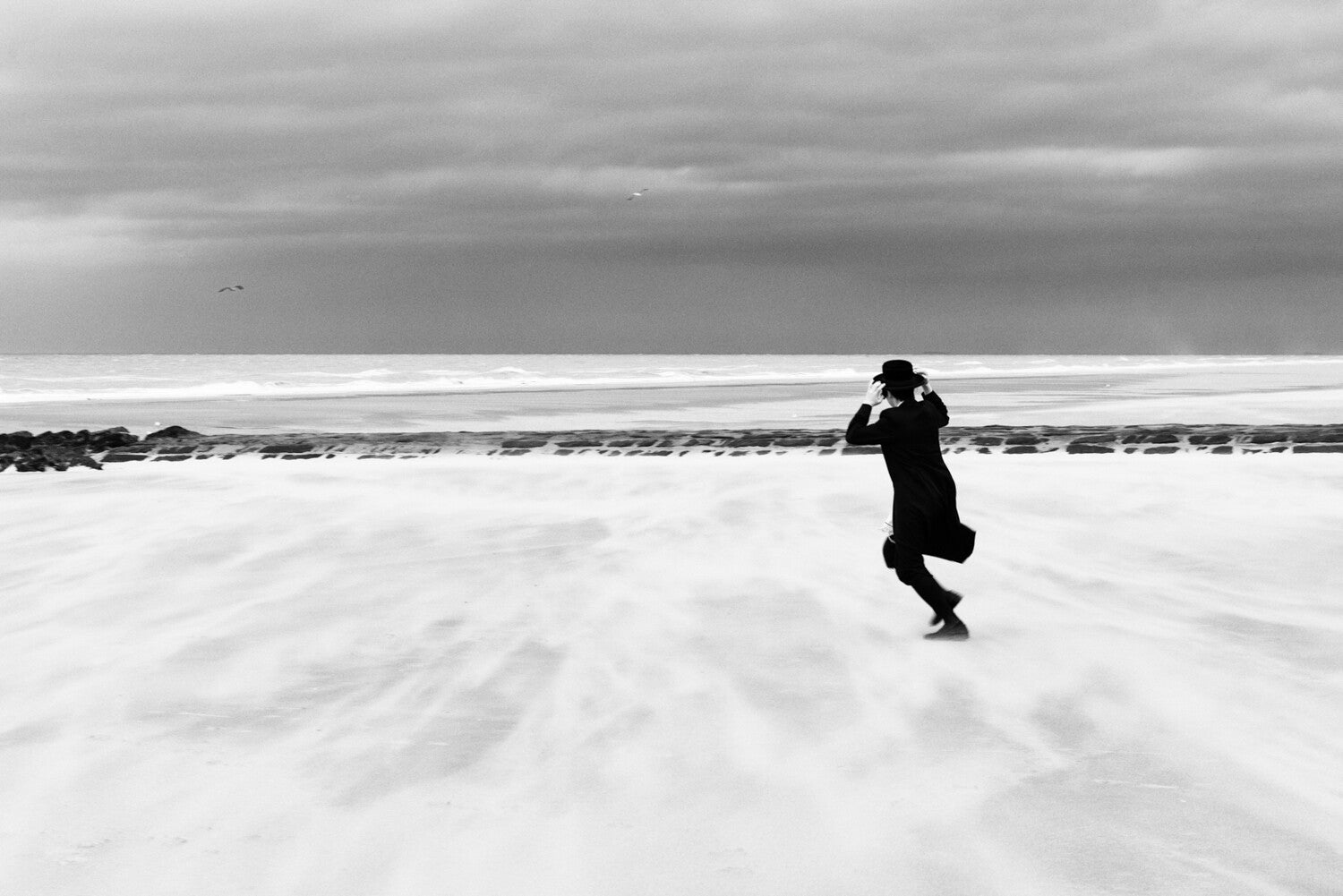
Structural use of negative space (The Beckettian Void)
In minimalist composition, what is left out dictates the emotional weight of what remains. Both artists use vast emptiness to swallow their subjects, a visual translation of Beckett's characters trapped in barren landscapes like the solitary tree in Waiting for Godot.
- Verloes's Photographic Void: In series like Losing our Minds and Inside the Outside, Verloes leverages the "physical act of leaving things out". He anchors lonely human figures against massive, uniform planes—such as vast, bleak sandy dunes, empty oceans, or enveloping sea fog. The disproportionate scale makes the human element seem fragile and incidental.
- Heylen's Painted Void: Heylen treats the canvas not as a window to a realistic scene, but as an oppressive space. His figures are often isolated against featureless backgrounds. By stripping away architectural markers or recognizable landscapes, the background ceases to stay behind; it presses heavily against the subject, trapping them in an inescapable "nowhere"
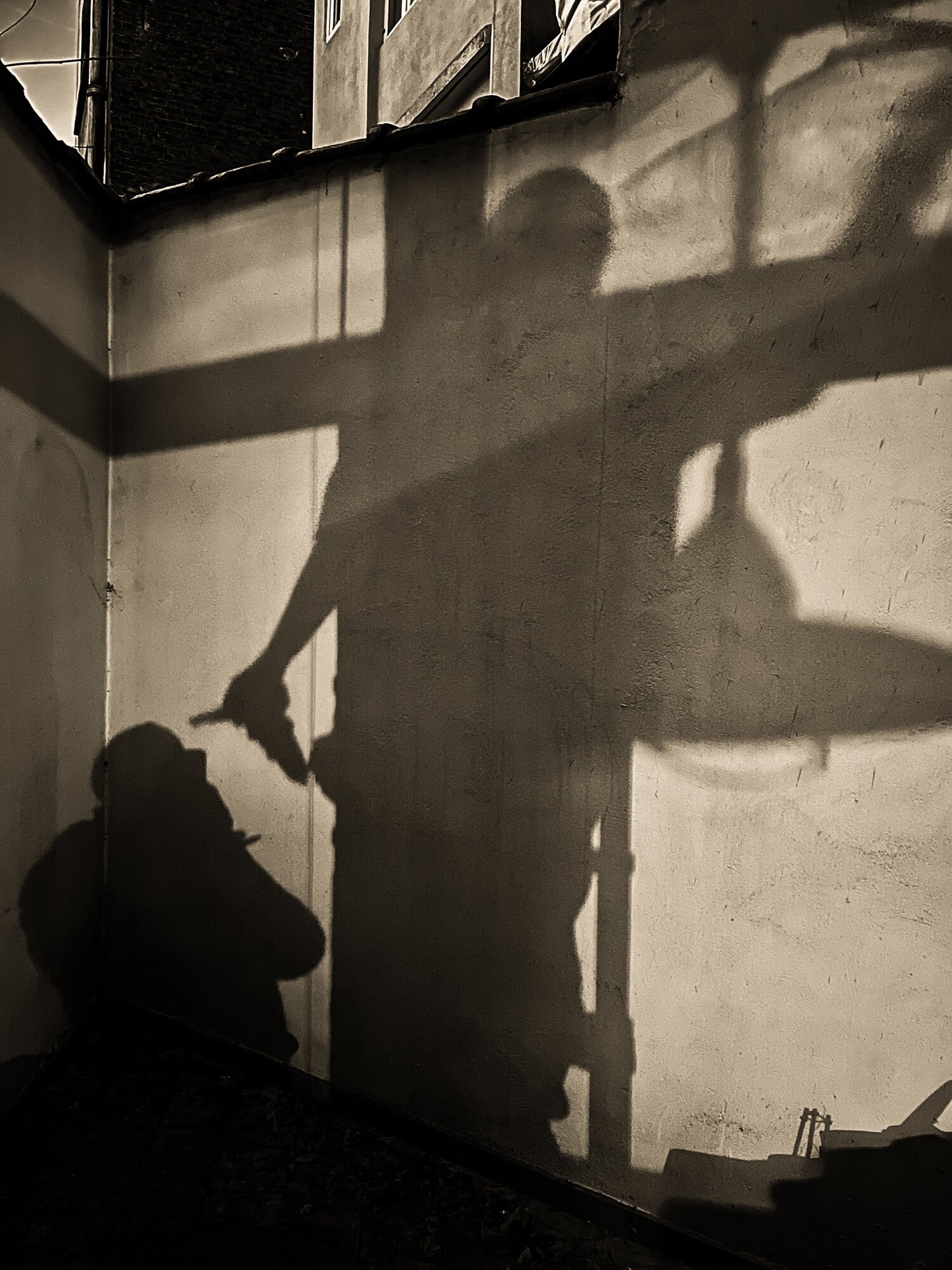
Light and shadow as narrative erasure
- Minimalist alienation relies heavily on denying the viewer easy answers. Rather than using light to reveal a subject, both artists use it to obscure information, keeping the narrative out of reach
- Verloes's "Ghost Exposures" and Silhouettes: Verloes uses deep, exaggerated exposure to force details directly into solid black shadows. His subjects become mere shadows of themselves—faceless silhouettes with their specific features hidden. By withholding their identities, he transforms local individuals (like people on the Belgian coast) into universal symbols of human wandering.
- Heylen's Murky chiaroscuro: Heylen's palette is famously dark, dominated by nocturnal blacks and muddy browns. Instead of defining the body clearly, his paint strokes intentionally blur the boundary between the figure and the dark background. Characters look less like solid people and more like half-formed apparitions emerging from or dissolving back into the dark night—echoing the voice in the dark so central to Beckett's prose.