Martin Parr versus Eddy Verloes: Life's a Beach
In the world of street photography, Martin Parr is an undisputed icon, and for Eddy Verloes, a significant inspiration and idol. This project, "Martin Parr versus Eddy Verloes," delves into the fascinating similarities and surprising contrasts between these two masters of the lens. Discover how their work converges thematically and diverges stylistically, and why this dialogue is essential to Eddy's artistic path. We invite you to join us on this visual journey that celebrates the depth of the human experience.

The sea as a laboratory: the extraordinary in the everyday
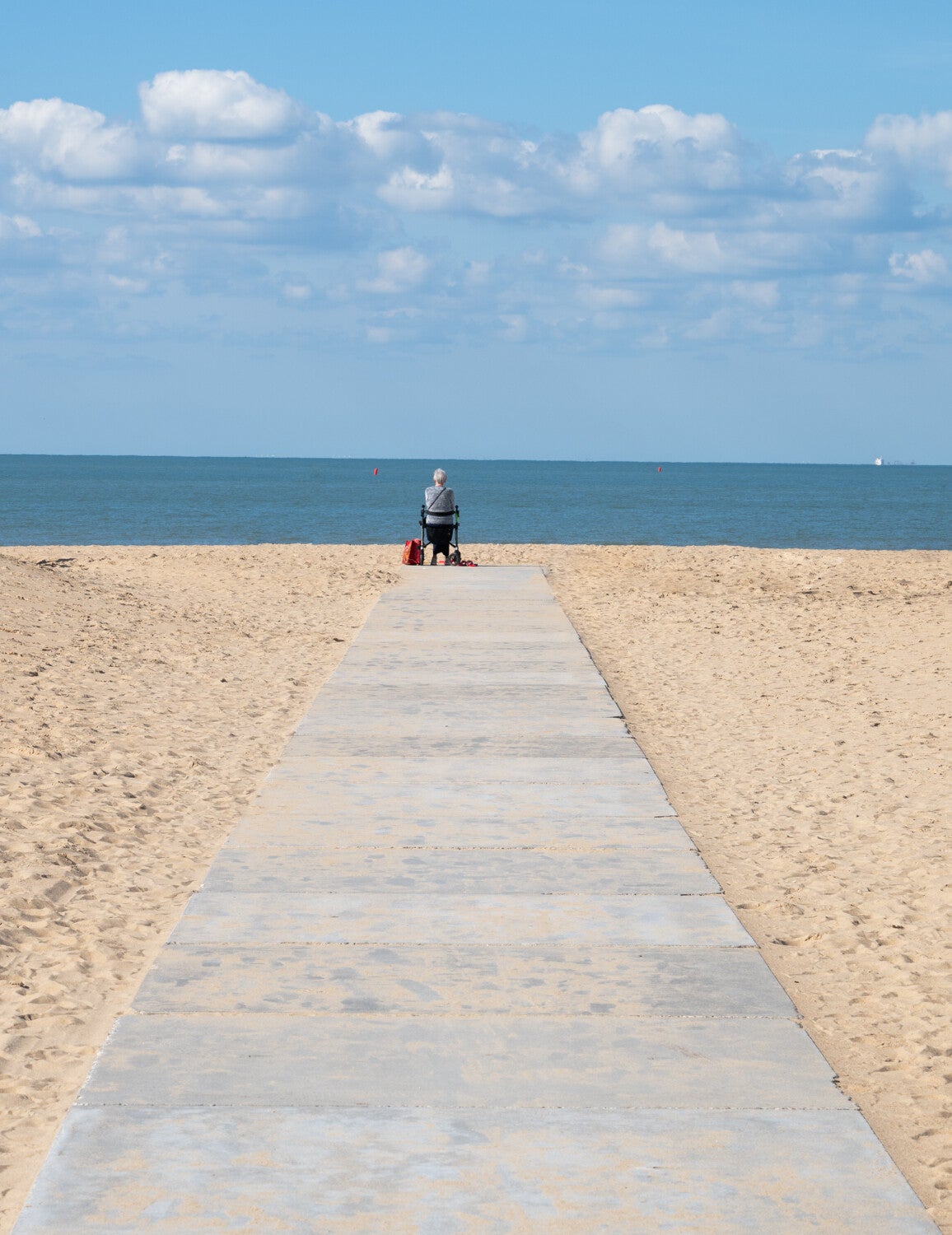
Both photographers see the world as a stage and the sea as a laboratory for human behavior. While Parr became world-famous with his iconic beach series like "Life's a Beach," Verloes found his breakthrough with the series "Losing Our Minds" on the Belgian coast. He also has a series with the same title, Life's a beach as a kind of tribute to his 'idol'.Their shared vision lies in the ability to elevate the banal of everyday life into meaningful social commentary, capturing spontaneous, often unnoticed encounters that reveal the extraordinary in the ordinary.

Humor and social criticism: a mirror for the soul
A central pillar in the work of both Parr and Verloes is humor, which often evokes an "ambiguous emotional response." Their photographs leave you unsure whether to laugh or cry at the absurdity of human existence. They use their camera as a tool for "powerful statements about society." Parr critiques consumerism and leisure, while Verloes explores universal themes such as the human soul, the relationship between humanity and nature, and the absurdity of social norms. They blur the lines between documentary and surrealism; Verloes with "theatricalization" - the abstracting of reality to evoke emotion - and Parr with "creating fiction out of reality."
Stylistic contrasts: from hyperrealism to poetic distance
While the subject matter is similar, their visual executions differ significantly. Parr is known for his vibrant, hyper-saturated colors, achieved with macro lenses and ring flashes, which cast a penetrating gaze on reality. Verloes, on the other hand, often chooses misty, desolate landscapes and silhouettes to create a poetic, mysterious, and sometimes "theatrical" atmosphere that invites contemplation. There is also a difference in intimacy: Parr often seeks a confrontational proximity to his subjects, while Verloes frequently portrays humans as "small, fragile elements" or "negligible dots" in a vast landscape, emphasizing that after viewing this page, one must wonder how these differences highlight the deeper meaning of human existence.